
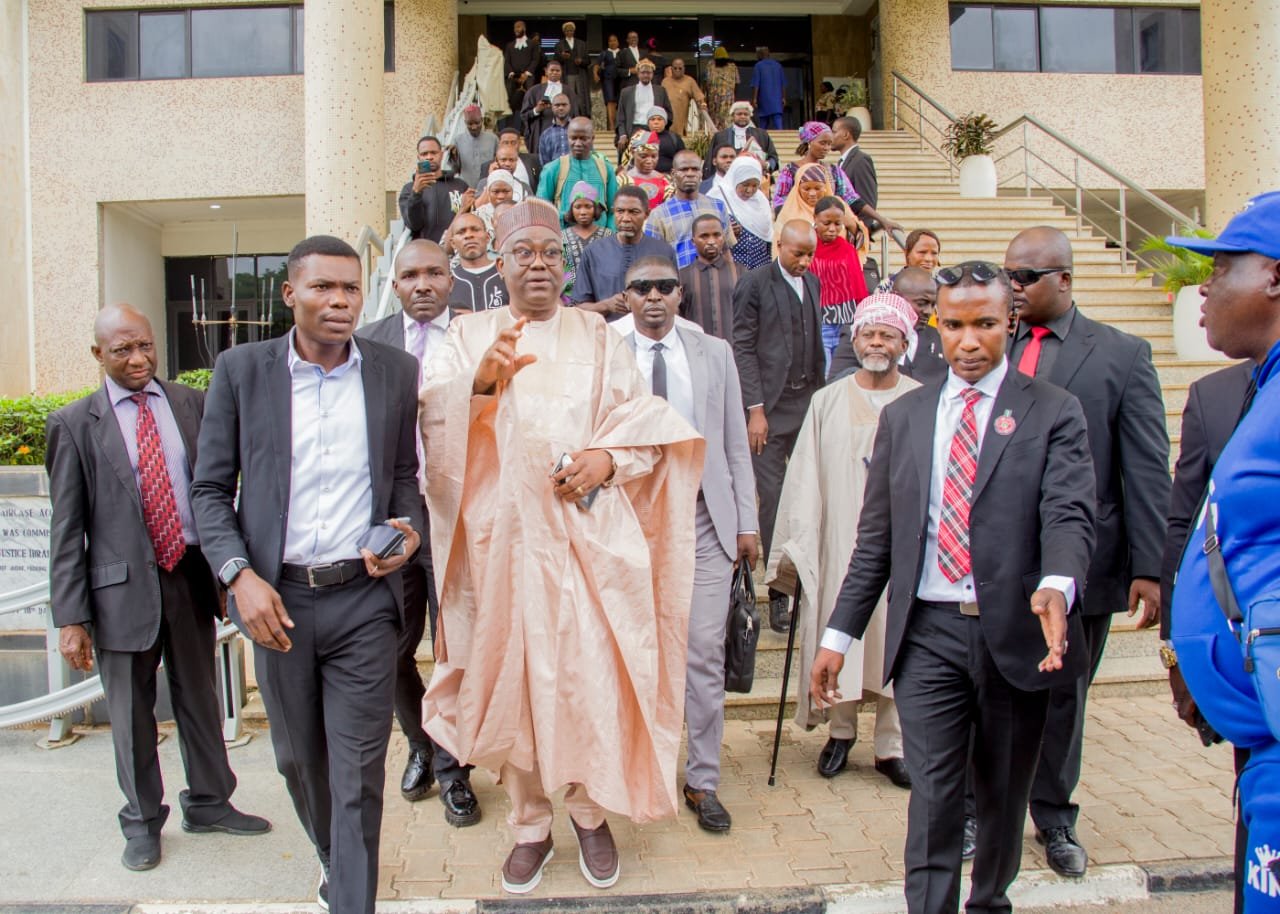
Accord presidential candidate, Dr. Gbenga Olawepo-Hashim, has attracted heightened attention across sections of Northern Nigeria’s social-media space following a Federal High Court judgment affirming his candidacy for the 2027 presidential election.
The judgment, delivered on October 5 by Justice Mohammed Umar of the Federal High Court in Abuja, ordered Accord Party to recognise Hashim as its presidential candidate and forward his name to the Independent National Electoral Commission (INEC) for uploading on its nomination portal.
The ruling has since generated reactions across sections of the Northern online community, with Arewa youths, women and social-media commentators discussing Hashim’s emergence, his political message and the implications of his candidacy ahead of the 2027 election.
The conversation has been particularly visible in parts of the North-West and North-Central, where discussions about the future direction of Northern politics have increasingly featured Hashim alongside former Vice-President Atiku Abubakar.
Online exchanges have also drawn supporters of Atiku into the debate, with some questioning the growing attention around the Accord candidate, while others have defended Hashim’s emergence and political message.
The development has consequently widened the conversation about whether new political voices can attract attention among younger Northern Nigerians who are seeking different approaches to the region’s longstanding economic, security and developmental challenges.
Hashim’s supporters have highlighted his emphasis on energy security, industrialisation, economic transformation and national security as central to his political proposition.
His campaign has increasingly presented him as offering a different policy direction ahead of 2027.
Although the intensity of the online reaction varies across platforms and communities, the visible enthusiasm among some sections of the Arewa online community has become difficult to ignore.
Supporters have used increasingly strong language to describe their attachment to Hashim, reflecting what they regard as a search for a new generation of political leadership.
However, whether the growing social-media attention will translate into electoral support cannot yet be established. There is currently no reliable public polling data measuring Hashim’s support base across Northern Nigeria.
The court judgment itself, however, has removed a major legal uncertainty surrounding his candidacy. Justice Umar held that evidence established that Hashim emerged as Accord’s sole presidential candidate at the May 30 primary and ordered the party to recognise him and forward his name to INEC.
With the legal dispute now producing a judicial determination, attention is shifting from the question of Hashim’s nomination to the broader political debate over his message, organisation and reception across Northern Nigeria and the rest of the country ahead of the 2027 presidential election.
*Gbenga Hashim’s Court Victory Sparks Social Media Buzz in Arewa*
Accord presidential candidate, Dr. Gbenga Olawepo-Hashim, has attracted heightened attention across sections of Northern Nigeria’s social-media space following a Federal High Court judgment affirming his candidacy for the 2027 presidential election.
The judgment, delivered on October 5 by Justice Mohammed Umar of the Federal High Court in Abuja, ordered Accord Party to recognise Hashim as its presidential candidate and forward his name to the Independent National Electoral Commission (INEC) for uploading on its nomination portal.
The ruling has since generated reactions across sections of the Northern online community, with Arewa youths, women and social-media commentators discussing Hashim’s emergence, his political message and the implications of his candidacy ahead of the 2027 election.
The conversation has been particularly visible in parts of the North-West and North-Central, where discussions about the future direction of Northern politics have increasingly featured Hashim alongside former Vice-President Atiku Abubakar.
Online exchanges have also drawn supporters of Atiku into the debate, with some questioning the growing attention around the Accord candidate, while others have defended Hashim’s emergence and political message.
The development has consequently widened the conversation about whether new political voices can attract attention among younger Northern Nigerians who are seeking different approaches to the region’s longstanding economic, security and developmental challenges.
Hashim’s supporters have highlighted his emphasis on energy security, industrialisation, economic transformation and national security as central to his political proposition.
His campaign has increasingly presented him as offering a different policy direction ahead of 2027.
Although the intensity of the online reaction varies across platforms and communities, the visible enthusiasm among some sections of the Arewa online community has become difficult to ignore.
Supporters have used increasingly strong language to describe their attachment to Hashim, reflecting what they regard as a search for a new generation of political leadership.
However, whether the growing social-media attention will translate into electoral support cannot yet be established. There is currently no reliable public polling data measuring Hashim’s support base across Northern Nigeria.
The court judgment itself, however, has removed a major legal uncertainty surrounding his candidacy. Justice Umar held that evidence established that Hashim emerged as Accord’s sole presidential candidate at the May 30 primary and ordered the party to recognise him and forward his name to INEC.
With the legal dispute now producing a judicial determination, attention is shifting from the question of Hashim’s nomination to the broader political debate over his message, organisation and reception across Northern Nigeria and the rest of the country ahead of the 2027 presidential election.