
•We don’t have to become identical to become one nation — Hashim
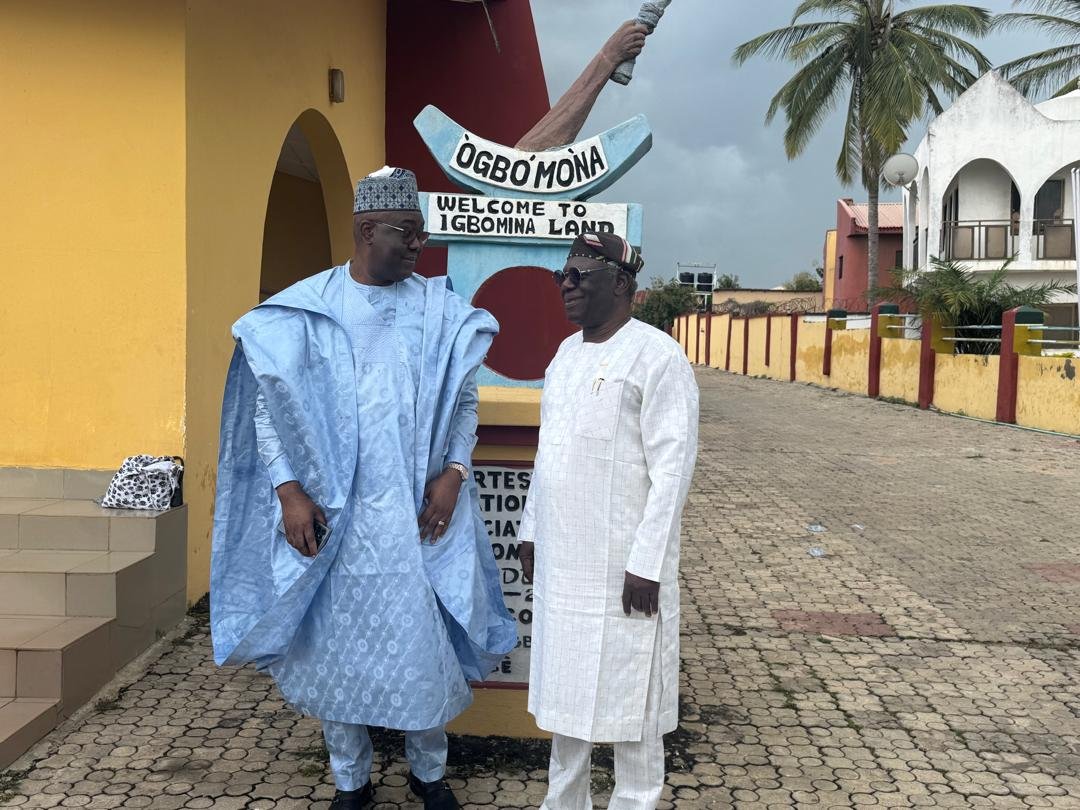
The National President of Omo Ibile Igbomina, Sir Bisi Fakayode, has received Accord Party presidential candidate, Dr. Gbenga Olawepo-Hashim, on a courtesy visit to the Omo Ibile Igbomina House in Ganmo, Kwara State, where both personalities reflected on their longstanding relationship, the development of the Igbomina institution and the wider question of national unity.
The visit also provided an opportunity for Hashim to draw from his personal connection with Igbomina and reflect on what he described as the region’s longstanding tradition of cultural accommodation and peaceful coexistence, which he said offers lessons for Nigeria’s nation-building project.
During the visit, Fakayode conducted Hashim around the Igbomina House, showcasing renovation, rehabilitation and other improvement projects undertaken under his leadership. He also took him on an inspection of the adjoining hospitality facility and other areas where development works are ongoing.
Fakayode expressed appreciation for Hashim’s longstanding support and encouragement, recalling that he was among the first three prominent supporters of the present Omo Ibile Igbomina leadership from its formative stage.
The group’s national president described Hashim as a friend, supporter and valued stakeholder of Igbomina, noting that although his ancestral origin is outside present-day Kwara State, his upbringing and longstanding relationship with Igbomina have created a strong bond between him and the people.
“What we are witnessing today did not start today. You supported and encouraged this journey from the beginning. From my days as a local government chairman to where God has brought me today as the national president of Omo Ibile Igbomina, your support and encouragement have been part of this journey,” Fakayode said.
Responding, Hashim commended Fakayode for the transformation taking place at Igbomina House and expressed appreciation for the opportunity to see the projects firsthand.
He acknowledged the progress recorded under Fakayode’s leadership and encouraged the Omo Ibile Igbomina leadership to remain committed to strengthening the institution and advancing the collective interests of the Igbomina people.
Hashim also reflected on Fakayode’s journey from public service and local government leadership to his present position as national president of Omo Ibile Igbomina, acknowledging the longstanding relationships, encouragement and support that accompanied the journey.
Beyond the immediate purpose of the visit, however, Hashim said his connection with Igbomina was deeply personal.
He explained that although his ancestral roots lie in Yauri, he has long regarded Igbominaland as home, having been raised within an Igbomina family that lived in New Bussa, Niger State.
According to him, that upbringing shaped his understanding of community, identity and belonging and exposed him to what he described as Igbomina’s remarkable tradition of accommodation and peaceful coexistence.
Hashim noted that Igbomina communities have historically existed alongside settlements and communities of people from different ethnic backgrounds, including Fulani, Hausa, Tiv, Zuru, Birom and Igala communities, among others.
He said these communities were not merely tolerated as outsiders but became part of the wider social, economic and political life of the communities around them while retaining their distinct identities.
For Hashim, that experience demonstrates that cultural diversity does not necessarily have to produce social fragmentation.
He described the social environment in which he was raised as an example of the “workability, resilience and strength of cultural pluralism,” arguing that people of different ethnic and cultural backgrounds can live, trade, farm, build relationships and participate in shared social and political spaces without abandoning their identities.
“We don’t have to become identical to become one nation. We can be different and yet belong together,” Hashim said.
Hashim argued that Nigeria’s diversity can become a source of strength when supported by mutual respect, appropriate institutions and a shared sense of belonging.
The Accord presidential candidate further said his visit to Omo Ibile Igbomina House was more than a social engagement.
He described it as “a reminiscence of where I came from, a celebration of what I have experienced, and an inspiration for what Nigeria can still become.”
Hashim concluded that Nigeria’s diversity need not be a weakness, arguing that “properly organised, mutually respected and institutionally protected,” it can become one of the country’s greatest sources of strength.
Omo Ibile Igbomina hosts Accord Party presidential candidate
•We don’t have to become identical to become one nation — Hashim
•President recalls three decades relationship, longstanding support
The National President of Omo Ibile Igbomina, Sir Bisi Fakayode, has received Accord Party presidential candidate, Dr. Gbenga Olawepo-Hashim, on a courtesy visit to the Omo Ibile Igbomina House in Ganmo, Kwara State, where both personalities reflected on their longstanding relationship, the development of the Igbomina institution and the wider question of national unity.
The visit also provided an opportunity for Hashim to draw from his personal connection with Igbomina and reflect on what he described as the region’s longstanding tradition of cultural accommodation and peaceful coexistence, which he said offers lessons for Nigeria’s nation-building project.
During the visit, Fakayode conducted Hashim around the Igbomina House, showcasing renovation, rehabilitation and other improvement projects undertaken under his leadership. He also took him on an inspection of the adjoining hospitality facility and other areas where development works are ongoing.
Fakayode expressed appreciation for Hashim’s longstanding support and encouragement, recalling that he was among the first three prominent supporters of the present Omo Ibile Igbomina leadership from its formative stage.
The group’s national president described Hashim as a friend, supporter and valued stakeholder of Igbomina, noting that although his ancestral origin is outside present-day Kwara State, his upbringing and longstanding relationship with Igbomina have created a strong bond between him and the people.
“What we are witnessing today did not start today. You supported and encouraged this journey from the beginning. From my days as a local government chairman to where God has brought me today as the national president of Omo Ibile Igbomina, your support and encouragement have been part of this journey,” Fakayode said.
Responding, Hashim commended Fakayode for the transformation taking place at Igbomina House and expressed appreciation for the opportunity to see the projects firsthand.
He acknowledged the progress recorded under Fakayode’s leadership and encouraged the Omo Ibile Igbomina leadership to remain committed to strengthening the institution and advancing the collective interests of the Igbomina people.
Hashim also reflected on Fakayode’s journey from public service and local government leadership to his present position as national president of Omo Ibile Igbomina, acknowledging the longstanding relationships, encouragement and support that accompanied the journey.
Beyond the immediate purpose of the visit, however, Hashim said his connection with Igbomina was deeply personal.
He explained that although his ancestral roots lie in Yauri, he has long regarded Igbominaland as home, having been raised within an Igbomina family that lived in New Bussa, Niger State.
According to him, that upbringing shaped his understanding of community, identity and belonging and exposed him to what he described as Igbomina’s remarkable tradition of accommodation and peaceful coexistence.
Hashim noted that Igbomina communities have historically existed alongside settlements and communities of people from different ethnic backgrounds, including Fulani, Hausa, Tiv, Zuru, Birom and Igala communities, among others.
He said these communities were not merely tolerated as outsiders but became part of the wider social, economic and political life of the communities around them while retaining their distinct identities.
For Hashim, that experience demonstrates that cultural diversity does not necessarily have to produce social fragmentation.
He described the social environment in which he was raised as an example of the “workability, resilience and strength of cultural pluralism,” arguing that people of different ethnic and cultural backgrounds can live, trade, farm, build relationships and participate in shared social and political spaces without abandoning their identities.
“We don’t have to become identical to become one nation. We can be different and yet belong together,” Hashim said.
Hashim argued that Nigeria’s diversity can become a source of strength when supported by mutual respect, appropriate institutions and a shared sense of belonging.
The Accord presidential candidate further said his visit to Omo Ibile Igbomina House was more than a social engagement.
He described it as “a reminiscence of where I came from, a celebration of what I have experienced, and an inspiration for what Nigeria can still become.”
Hashim concluded that Nigeria’s diversity need not be a weakness, arguing that “properly organised, mutually respected and institutionally protected,” it can become one of the country’s greatest sources of strength.